


Indoor Cat Boredom: The Signs Cat Owners Usually Miss
The boredom signs that look like normal cat behavior or illness, and the enrichment that actually suits cats.

A bored dog chews the sofa and everyone notices. A bored cat sleeps more, grooms more and asks for food more, and everyone concludes the cat is content, lazy and a bit greedy.
That is the problem with indoor cat boredom. The signs look like normal cat behavior, or they look like illness, and neither reading gets your cat what they actually need.
Indoor cat boredom often shows up as sleeping all day, constant food requests, overgrooming, 4 am sprints, excessive meowing and ambushing ankles. Rule out a medical cause first, then add easy food enrichment, vertical space, a window to watch and two ten-minute play sessions a day that end with a catch.
What are the signs of boredom in indoor cats?
| What you see | What owners usually think | What it can actually be |
|---|---|---|
| Sleeping most of the day | Cats sleep a lot; this is normal | Under-stimulation. Sleeping all day can signal boredom rather than contentment. |
| Constant food requests | Hunger | Pestering for attention, often mistaken for hunger, which leads to overfeeding and weight gain |
| Overgrooming, bald patches | A skin problem | Grooming that makes up for a lack of stimulation, especially in indoor cats left alone most of the day |
| 4 am sprints around the house | Funny, just zoomies | Pent-up energy with nowhere to go during the day |
| Excessive meowing | Being vocal | Attention-seeking from under-stimulation |
| Scratching furniture, climbing curtains | Being destructive | Searching for stimulation |
| Ambushing ankles, biting during play | Playing rough | Predatory drive with no legitimate outlet |
| Pacing the same route | Restlessness | A repetitive behavior pattern linked to surroundings that never change |
| Litter box avoidance | Spite, or a dirty box | Stress, which can also point to a urinary problem |
A caution that has to come first. Every one of these can be a medical problem, and the signs of an under-stimulated cat can be hard to tell apart from signs of illness. Sudden changes in appetite, litter box habits, grooming or activity warrant a vet visit before you assume boredom. Overgrooming in particular can be allergies, parasites or pain.
Rule out the medical explanation, then address the enrichment gap.
Why do indoor cats get bored more easily?
An outdoor cat spends the day hunting, patrolling, climbing and watching. An indoor cat has the same instincts and an apartment with three rooms. There are four specific gaps.
Hunting
- Cats are built around a cycle of stalk, chase, pounce, kill and eat
- A bowl delivers the last step and skips the four before it
- This is the largest single gap
Vertical space
- Cats assess safety by height
- A home with nothing above waist level is a stressful home
Territory patrol
- Cats walk a route repeatedly
- Indoors, that route is very short
Novelty
- Nothing changes
- Same rooms, smells and furniture, every day for years
The hunting gap is the one food-based enrichment addresses directly, and it is the one most closely tied to the two most common outcomes: weight gain and attention-seeking.
Why doesn't dog enrichment advice work for cats?
Most enrichment advice is written for dogs and applied to cats badly. Cats are not small dogs.
- Cats graze, dogs commit. A dog will work at one thing for forty minutes. A cat visits, engages for a few minutes, wanders off and comes back. Short sessions are normal, not failure.
- Cats need several sites, not one long session. Several small enrichment points around the home beat one big one in the kitchen.
- Cats hunt several times a day. Wild feeding involves many small kills, not two meals, so multiple tiny portions suit them better.
- Cats will not work as hard for food. A dog will persist through frustration. A cat gives up and walks away, so difficulty has to start much lower.
- Cats are more sensitive to novelty. A new object gets investigated. The same object in the same place for a month becomes invisible.
For cats: rotate often, keep it easy, keep it small, and put it in more than one place.
How does food enrichment help a bored cat?
The aim is to make your cat work a little for food rather than finding it all in a bowl.
Start easy. Genuinely easy. A cat who cannot get anything out on the first attempt will not try again. Begin with something they can solve in under a minute, then increase the difficulty over weeks.
Split the daily ration. Divide the food they already eat across several enrichment points instead of one bowl. It is calorie-neutral, which matters because indoor cat obesity is common and boredom feeds directly into it. Our guide to slow feeding for overweight indoor cats shows how to set it up.
Frozen fills work for cats, with adjustments. Portions are much smaller than for dogs, texture matters more, and cats prefer to lick and lap rather than chew. Wet food, plain unsweetened yogurt in tiny amounts, or a little unsalted broth frozen thin all work, and the FreezPaw range is designed for exactly this.
“Absolutely love our Freezbones! This one is perfect for our 6 month old kitten who’s very food motivated and ALWAYS up to no good. It keeps him busy for 30-45 minutes and gives him a good brain exercise so he’s calmer the rest of the day.”
Kayla C., verified buyer
Scatter feeding. Throw a portion of dry food across a rug or a hallway. It is free, and it gets your cat moving and hunting.
Hide portions. Put small amounts in different rooms and at different heights. The searching is the point.
Good fills for cats
- Their own wet food, frozen thin
- A little unsalted broth
- Plain full-fat yogurt in tiny amounts only
Keep out
- Onion and garlic, which are worse for cats than for dogs
- Anything sweetened with xylitol
- Dairy beyond tiny amounts, which upsets many adult cats
The full cat list is in our guide to cat-safe frozen fills, and it differs from the dog version.
What else does a bored indoor cat need?
Food enrichment is one part. On its own, it will not fix a bored cat.
- Vertical space. Shelves, a cat tree, cleared windowsills. This is the highest-return change in most homes, and it costs the least.
- A window with something to watch. A bird feeder outside a window is the cheapest entertainment there is.
- Interactive play, twice daily, ten minutes. Wand toys that let the cat stalk, chase and catch. Crucially, let them catch it at the end. A hunt with no kill is frustrating rather than satisfying.
- Scratching posts, more than one, vertical and horizontal. Place them where your cat already scratches, not where it suits the furniture.
- Rotation. Put most toys away. Bring out three or four at a time and swap weekly, and the same toys become new again.
- Hiding places at floor level. Boxes, covered beds, space under furniture. Cats need somewhere to retreat as much as somewhere to climb.
Looking for ideas? Our roundup of the best cat enrichment toys for indoor fun is a good starting point.
What does a good daily routine look like?
Short, repeatable, and it fits around a working day.
| When | What to do |
|---|---|
| Morning | Ten minutes of wand play, then breakfast split between two enrichment points |
| Midday | A small hidden portion left before you leave; window seat available |
| Afternoon | Nothing needed. Cats sleep. |
| Evening | Ten minutes of interactive play ending with a catch, then dinner from a puzzle or frozen fill |
| Night | A small scattered portion before bed to reduce 4 am waking |
That last one is worth trying if your cat wakes you. A cat who hunts before sleeping tends to sleep afterwards.
How is boredom different in multi-cat homes?
Boredom presents differently when there is more than one cat.
- Competition suppresses enrichment. A more confident cat will monopolize anything interesting. The quieter cat gets nothing and gets blamed for not engaging.
- Space enrichment points apart, ideally in different rooms and at different heights.
- One per cat, plus one. The standard resource rule for litter boxes applies to enrichment too.
- Watch for the cat who stops trying. The under-stimulated one is usually the one nobody worries about, because they are quiet.
“I always love a company who not only loves dogs, but also loves cats! All 3 cats love the star and lick treats!”
Lexi P., verified buyer
When should a bored cat see the vet first?
Do not start an enrichment program instead of a vet visit if you see:
- A sudden change in appetite, up or down
- Any change in litter box habits, since urinary problems in cats can be an emergency, particularly in males
- Overgrooming that has caused bald patches or damaged skin
- Vomiting or diarrhea alongside behavior changes
- Constant hiding in a cat who did not hide before
- Weight loss
- Pacing that cannot be interrupted
Boredom and illness look alike in cats. Rule out the second, then address the first.
General information, not veterinary advice. See your vet for any sudden change in your cat's behavior, appetite or litter box habits.
Frequently asked questions
-
Yes. Indoor cats have the same hunting, climbing and patrolling instincts as outdoor cats with far fewer outlets, and boredom shows up as sleeping, overgrooming, vocalizing and attention-seeking.
-
The signs overlap heavily. See a vet first for any sudden change, particularly in appetite, litter box use or grooming.
-
Two sessions of around ten minutes a day is a reasonable baseline, more for young and active cats. Let them catch the toy at the end.
-
Often it is pent-up energy from an under-stimulating day. An evening play session ending in a catch, plus a small scattered portion before bed, usually helps.
-
Not reliably, and it can create new problems. Fix the environment first.
-
Make it easier. Cats give up far faster than dogs. Start with something they can solve in seconds and build from there.
Shop this guide
Buy 2 save 15% · 3 save 20% · 4 save 25%
-
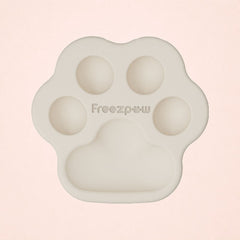
FreezPaw Lick Pad
he Perfect Enrichment Toy for Feline Fun Introducing the FreezPaw, the ultimate playtime and...
$24.00
Shop Freezpaw Cat Relax Lick Pad -
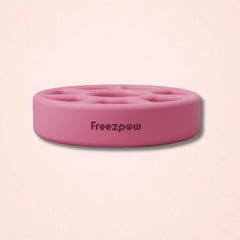
FreezSpin
Introducing the FreezSpin, an enrichment toy with a wheel-shaped design featuring multiple compartments, perfect...
$24.00
Shop FreezSpin Cat Durable Interactive -
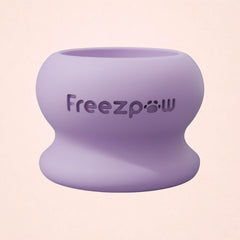
FreezPounce
Introducing the FreezPounce, a dynamic and long-lasting enrichment toy for cats. It's designed to...
$24.00
Shop FreezPounce Cat Durable Fillable
Keep reading in Cats

Cat Lick Mats: What They Are, What to Put on Them and How to Freeze and Clean Them
What a lick mat does for a cat, the safe fills to spread on it, and how to freeze and clean it.

Cat Treat Toys and Treat Dispensers: Which Type Suits Your Cat?
Dispensers, lick toys and freezing toys compared, plus how to get a reluctant cat to try one.

Cat Paste Treats and Lick Sticks: How to Serve Them, How Many to Give and How to Make Them Last
Three ways to serve a lick stick, how many fit in your cat's day, and how to make one last longer.