


Back to the Office? The Exit Strategy That Helps Prevent Separation Anxiety
Why the minutes before you leave matter most, and the 10-minute frozen toy routine that keeps dogs calm.

Shoes go on in the morning. Keys jingle. The door closes, and the house goes quiet. For many dogs, the return to office life brings on separation anxiety, even if they handled alone time well before.
Dogs do not react to your job. They react to predictability, and when it disappears, stress fills the gap. The good news is that separation anxiety is often preventable, not with big gestures but with small, well-timed habits. One of the most effective is what we call an exit strategy, and it starts 10 minutes before you leave.
Give your dog a frozen, filled toy about 10 minutes before you head out, not at the door. Keep the goodbye low-key and leave while they are busy. Use the same routine every day, workdays or not, and most dogs learn that your departure means settling down, not panic.
What does separation anxiety look like?
Separation anxiety is not disobedience or attention-seeking. It is distress caused by being alone, or by anticipating being alone.

- Barking or howling shortly after you leave
- Destructive chewing near doors or windows
- Pacing, drooling or heavy panting
- Refusing food once you are gone
- Following you closely before you leave
Many owners miss the early signs, because the problem often builds quietly in the minutes before you go. That is where an exit strategy matters most.
Why do the minutes before you leave matter so much?
Dogs are excellent pattern readers. Long before the door closes, they have spotted the signs:

Picking up your keys. Putting on your shoes. Opening the laptop bag. Standing near the door. These cues stack up and build anxiety before you have even left. By the time you go, your dog may already be stressed.
The goal is to change what those cues mean: not "you are leaving," but "something good is coming."
What is the 10-minute rule?
Why 10 minutes? Because it:
- Creates emotional distance from the moment the door actually closes
- Lets your dog settle into a focused activity first
- Stops the treat becoming a goodbye signal
Done right, your departure becomes background noise.
Why does a frozen toy help with separation anxiety?
Not every treat or toy helps an anxious dog. A frozen, refillable toy works because it combines mental engagement, a soothing behavior and time.
1. Licking is calming
- Licking is a naturally soothing behavior
- It helps many dogs slow down and settle
2. Frozen fills take time
- A prolonged, predictable activity
- Not a quick reward that is gone in seconds
3. Refillable means consistent
- The same object every day builds familiarity
- For anxious dogs, familiar feels safe
4. It shifts the pattern
- Instead of watching you leave, your dog learns:
- "When this happens, I settle."
That emotional shift is the real win. For more on why licking settles dogs, see can licking really calm your dog?
How do I use a frozen toy as an exit strategy?
Timing and consistency are everything. Here is the routine, step by step:

- Prepare the toy in advance. Fill and freeze it the night before.
- Offer it 10 minutes before leaving, not at the door.
- Skip the dramatic goodbye.
- Leave calmly while your dog is engaged.
- Do not rush back if you hear noise straight away.
The first few days are about learning. Most dogs adjust quickly when the pattern stays consistent.
What should I put inside for anxiety support?
You do not need anything fancy. Simple, safe ingredients work best:
Good calming fills
- Plain yogurt or kefir
- Mashed banana or pumpkin
- Bone broth, frozen in layers
- Your dog's regular food, soaked and frozen
The goal is slow eating, not excitement. For more ideas, the Freezbone recipe videos show fills step by step.
“Bella loves her Freezbone and all the fillings! It’s made such a difference—having a frozen treat with her favorite goodies keeps her happy and makes leaving her so much easier.”
Carey-ann W., verified buyer
What mistakes make separation anxiety worse?
Avoid
- Giving the toy right at the door
- Only using it on workdays
- Making a big, emotional exit
- Snatching the toy away the moment you walk back in
- Inconsistent schedules
Consistency builds confidence. Randomness builds anxiety. Let your dog finish at their own pace, and pick the toy up once it is empty.
The short version
- Separation anxiety often starts before you leave.
- The pre-departure window is the most important moment.
- A frozen toy 10 minutes before you go builds a positive association.
- Licking and frozen enrichment support calm behavior.
- Consistency matters more than perfection.
Separation anxiety does not mean your dog is too attached. It means they feel unsure about what comes next. Your job is not to remove alone time. It is to make it predictable and emotionally safe. A calm exit teaches your dog something powerful: "I can handle this." For more ways to keep a dog busy while you are out, read our guide to toys for separation anxiety.
Frequently asked questions
-
For mild to moderate anxiety, this routine is often enough. Severe cases may need behavior training alongside enrichment, so speak to your vet or a qualified behaviorist.
-
Yes. Short departures help reinforce the pattern. The goal is predictability, not duration.
-
Some dogs improve within a few days. Others take two to three weeks. Progress is usually gradual but noticeable.
-
Handing it over at the door can turn the treat into a goodbye signal. Giving it 10 minutes before you leave lets your dog settle into the activity, so the door closing becomes background noise.
Shop this guide
Buy 2 save 15% · 3 save 20% · 4 save 25%
-
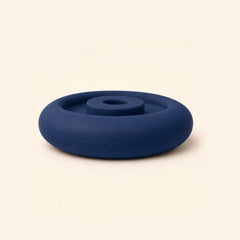
Freez Doughnut
Super durable and fillable, made for powerful bites. Small fits dogs up to 50 lbs, large up to 90 lbs.
$25.00
Shop Freez Doughnut - Super Durable Treat Toy
Keep reading in Anxiety & Calm

Enrichment for Senior Dogs: Gentle Brain Games and Soft Frozen Fills
An older dog's body slows down long before their brain stops wanting a job....

How to Calm an Anxious Cat? Vet Trips, Carriers, Visitors and Moving
Most anxious cats aren't anxious all day. They panic at predictable moments: the carrier...

Is Bone Broth Safe for Dogs? Store-Bought vs Homemade, and How to Freeze It
Yes, bone broth is safe for most dogs, as long as it's plain: no...