


Enrichment for Senior Dogs: Gentle Brain Games and Soft Frozen Fills

An older dog's body slows down long before their brain stops wanting a job. Enrichment for senior dogs keeps that brain busy without asking stiff joints or a sore mouth to do more than they can. This guide covers gentle brain games, low-impact activities for dogs with arthritis, soft frozen fills for dogs with bad teeth, and a daily routine for dogs showing early signs of dementia.
Start with a vet check-up. Pain, dental disease and vision or hearing loss all change what your dog can enjoy, and treating them can make play comfortable again.
Why enrichment for senior dogs matters
Two studies explain why it's worth the effort.
In a two-year study, researchers split 48 older beagles, aged 7 to 11, into groups. Some got an antioxidant-rich diet, some got enrichment (exercise at least twice a week, play with other dogs and a variety of toys), and some got both. Dogs on both did best on learning tests, and dogs on either one did better than dogs on neither
The Dog Aging Project then looked at more than 15,000 pet dogs. The odds of canine cognitive dysfunction rose 52% with each year of age, and inactive dogs had 6.47 times the odds of very active dogs of the same age and health. The authors note the study can't prove inactivity causes decline, since a dog in decline may also move less.
The takeaway is practical, not a promise. Keeping an old dog's body and brain gently busy is one of the few things you control, and it makes the days better either way.
What that looks like in real life: a 12-year-old Lab who once fetched for an hour may now manage a 10-minute stroll. Add a nose game on the living room rug and a frozen breakfast in a lick toy, and that same dog still gets three different jobs a day.
Signs of dog dementia, and when to see your vet
Vets call dog dementia canine cognitive dysfunction, and they track its signs with the acronym DISHAA.
|
Letter |
Stands for |
What you might notice |
|
D |
Disorientation |
Getting stuck behind furniture, staring at walls, seeming lost in familiar rooms |
|
I |
Interactions |
Less interest in greeting people, more clinginess or irritability |
|
S |
Sleep-wake changes |
Sleeping more in the day, pacing or restless at night |
|
H |
House soiling |
Accidents indoors after years of reliable house training |
|
A |
Activity |
Less interest in exploring, or aimless pacing |
|
A |
Anxiety |
New worry about being alone, noises or strangers |
The condition is common and often missed. In one study, it affected 28% of dogs aged 11 to 12 and 68% of dogs aged 15 to 16. An international survey found that only 2% of older dogs with signs had been diagnosed by a vet.
See your vet if you notice any of these changes. Other problems can look the same: arthritis pain, for example, can make the walk outside hard enough to cause accidents. If your vet diagnoses dementia, they may suggest medication or a diet change alongside the enrichment and routine below.
Brain games for older dogs
Older dogs tire faster, so keep sessions to a few minutes and stop while your dog still wants more. Each game below has an easier version for dogs who need it.
1. Find it. Let your dog watch you drop a treat on a rug, say "find it," and let them sniff it out. Once they get the idea, hide treats under a towel corner or behind a chair leg. Easier: scatter a few pieces of kibble on a non-slip rug so your dog can search without walking far.
2. The muffin tin game. Put a treat in a few cups of a muffin tin and cover every cup with a tennis ball. Your dog nudges the balls off to find the treats. Easier: cover only half the cups.
3. Which hand? Close a treat in one fist, hold out both hands and let your dog choose with a nose touch. Open the right hand to reward a correct pick.
4. A new trick from the dog bed. Old dogs can learn new tricks, and a good trainer can adapt any trick to what your dog's body can do. Try tricks that work lying down: a chin rest on your hand, a nose touch to your palm, or "look" on cue.
5. The sniff walk. Let your dog set the pace and pick the route. A short drive to a new neighborhood gives them new smells without a longer walk.
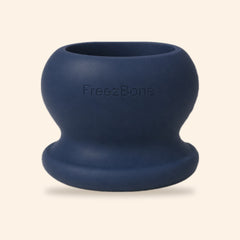
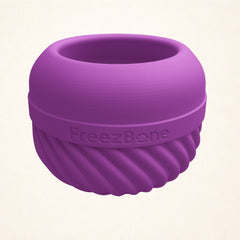
6. A frozen lick toy. Licking food out of a toy is slow, calm work that suits dogs of any mobility. A wide, shallow toy like the Freezflower Cup lets your dog reach the food without pushing their nose deep into a narrow opening. The small cup holds up to ¾ cup of kibble, and the large holds up to 1.2 cups, enough for a meal.
An example: a 13-year-old beagle with cloudy eyes can still play find it, because the game runs on her nose, not her eyes. Use stronger-smelling treats and keep the search area small and familiar.
Activities for senior dogs with arthritis
Dogs with sore joints still need to move. Low-impact exercise helps them keep muscle and mobility, while high-impact or repetitive movement can make the pain worse (Oakland Veterinary Referral Services). Swap the old favorites for gentler versions.
|
Instead of |
Try |
|
One long walk |
Several short walks on flat ground, built up gradually |
|
Ball chasing |
A slow sniff walk or a find-it game on a rug |
|
Rough play with young dogs |
A calm play date with another older dog |
|
Jumping onto the sofa or into the car |
A ramp, or lifting small dogs |
|
Hard, slippery floors |
Non-slip rugs where your dog walks and eats |
Swimming is another option because water supports your dog's weight. Ask your vet first, and use a dog life jacket.
Bring enrichment down to floor level. For a dog who can't walk far, set a lick toy on a non-slip mat beside their bed, or scatter breakfast across a rug for a slow, nose-down search. They get the mental work without the strain.
Watch the weight. Extra pounds put more load on sore joints, and enrichment food counts. Our calorie table for toy fillings and our guide to low-calorie licking show how to keep frozen toys part of the daily food allowance.
Ask about joint support. If your dog is stiff after rest, ask your vet whether a supplement such as Hip & Joint Chews or Scoop-A-Day Joint Powder suits them. Supplements work alongside your vet's pain plan, not instead of it.
Soft treats for senior dogs with bad teeth: the frozen-fill method
Worn, loose or missing teeth don't mean the end of food enrichment. They mean softer fillings and a little patience. Watch for signs of mouth pain first: dogs with a broken tooth may avoid chew toys and refuse treats they have to bite (Cornell Riney Canine Health Center). If you see that, book a dental check before you change anything else.
Three rules for dogs with sensitive mouths:
1. Choose a wide, shallow toy. Your dog should reach the food by licking, not by gripping or biting. The Freezflower Cup works well here.
2. Soften before serving. Let a frozen filling sit for a few minutes before you hand it over, and start with something smooth like plain yogurt (Freezbone). A partly frozen filling is soft enough to lick but still lasts longer than a fresh one.
3. Never offer hard frozen chunks. Ice cubes are on the list of hard objects that commonly fracture dogs' teeth. Licking softened food out of rubber is a different job from biting ice.
Soft fillings that suit older mouths:
|
Filling |
How to keep it soft |
Good to know |
|
Kibble mash |
Soak their usual kibble in warm water until soft, then mash |
Calorie-neutral when you take it from the meal |
|
Pumpkin and yogurt |
Mix plain canned pumpkin with plain unsweetened yogurt |
Use pumpkin, not pie filling |
|
Wet food |
Thin your dog's usual wet food with a splash of water |
The easiest swap for most dogs |
|
Sweet potato |
Mash plain cooked sweet potato with no butter or seasoning |
Adds variety without much prep |
|
Broth and wet food |
Stir low-sodium broth with no onion or garlic into wet food |
Keeps the mix moist as it thaws |
An example: a 14-year-old terrier who lost her front teeth at her last dental cleaning can still enjoy a nightly lick session. Spread pumpkin and yogurt across a Freezflower Cup, freeze it, then let it soften on the counter for a few minutes before she gets it.
Not sure which toy shape suits your dog? Our comparison of lick mats and fillable toys walks through the trade-offs, and our guide to dental chews versus toys covers dental care for dogs who still chew.
Dog dementia enrichment: routine first, games second
For a dog with cognitive decline, predictability matters as much as stimulation. Veterinary behaviorist Dr. Sagi Denenberg calls mental and environmental enrichment critical for these dogs, and vet Dr. Linda Simon recommends steady routines and night lights for dogs who get confused after dark (Countryfile, quoting vet Dr. Linda Simon).
• Keep the timetable steady. Feed, walk and settle your dog at the same times every day.
• Leave furniture where it is. A familiar layout is easier to navigate.
• Make games easy wins. Success keeps a confused dog engaged. If they lose interest, go back a step.
• Light the way at night. A night light in the hallway helps a dog who wakes up unsure where they are.
• Wind down the same way each evening. A softened frozen lick toy in the same quiet spot can become a bedtime signal.
A sample day for a senior dog
Use this as a starting point and adjust it to your dog's energy and your vet's advice.
|
Time |
Activity |
Why it helps |
|
Morning |
10-minute sniff walk, then breakfast as a kibble mash in a Freezflower Cup |
Gentle movement plus a slow, calm meal |
|
Midday |
Five minutes of find it on a rug |
Nose work with almost no strain |
|
Afternoon |
A second short walk and two minutes of a new trick |
Movement and new learning in small doses |
|
Evening |
A softened frozen lick toy in the same quiet spot |
A calm, predictable wind-down before bed |
|
Night |
Hallway night light on |
Easier navigation if your dog wakes up |
Frequently asked questions
What is the best enrichment for senior dogs?
The best enrichment matches what your dog can still do comfortably. For most older dogs that means short sniff walks, nose games on the floor, simple tricks and a softened frozen lick toy.
Can old dogs learn new tricks?
Yes. Choose tricks that don't need jumping or sitting up, such as a chin rest or a nose touch, and keep sessions to a couple of minutes.
How long should brain games last for an older dog?
A few minutes is plenty. Stop while your dog still wants more, and spread short sessions through the day.
Are frozen toys safe for senior dogs with bad teeth?
They can be, with softer fillings and a few minutes of thawing before you serve them. Avoid ice cubes and hard frozen chunks, and get a dental check if your dog shows signs of mouth pain.
Does enrichment help dog dementia?
Research links enrichment and activity with better cognitive health in older dogs, and vets include enrichment in dementia care. It isn't a cure, so pair it with your vet's plan.
Pick one game from this guide and try it with your dog tomorrow morning, before breakfast, while your dog is hungry. Then turn breakfast itself into a softened frozen meal. Two small changes give your senior dog two new jobs every day.
For more on caring for older dogs, read about the new frailty assessment tool for senior dogs and some heartwarming stories of older pets.
General information, not veterinary advice. Check with your vet before changing the diet or exercise of a dog with a medical condition.
Shop this guide
Buy 2 save 15% · 3 save 20% · 4 save 25%
-
Freezball
Our #1 seller. Fill it, freeze it, and get up to 45 minutes of licking and chewing.
$15.95
Shop Freezball Dog Chew Toy- Durable Fillable Dog Chew Bone -
FreezJumbo™
The FreezJumbo was created for dog parents who are done wasting money on toys...
$16.95
Shop FreezJumbo™ – Our Biggest & Toughest Enrichment Toy Ever -
FreezBrick
Stackable and modular: use it alone, add the challenge lid, or stack several in the freezer.
$26.95
Shop FreezBrick - Stackable Frozen Treat Toy for Dogs

Keep reading in Anxiety & Calm

How to Calm an Anxious Cat? Vet Trips, Carriers, Visitors and Moving
Most anxious cats aren't anxious all day. They panic at predictable moments: the carrier...

Is Bone Broth Safe for Dogs? Store-Bought vs Homemade, and How to Freeze It
Yes, bone broth is safe for most dogs, as long as it's plain: no...

Holiday Houseguests: Keeping a Dog Settled When the House Is Full
A two-week plan for a calm dog in a full house: retreat room, guest rules, freezer prep and food dangers.