


Labrador Dog Enrichment Toy Guide: How to Keep Your Lab Out of Trouble?
Why bored Labs get destructive, and the frozen toys, feeders and daily routine that keep them busy.

If you live with a Labrador, you know the signs: chewed baseboards, stolen socks, and a trash can that somehow ends up tipped over every time you leave the house. Labs are one of the most popular breeds in the world, and one of the most destructive when they are bored.
None of that is your dog being bad. It is a Labrador with nothing to do. This guide covers why Labs get into trouble, what enrichment means for this breed specifically, and the Labrador enrichment toys and routines that keep them busy and out of your belongings.
A Lab needs three things every day: real exercise, mental work, and something appropriate to chew. Walks cover the first. A frozen, filled toy covers the other two at once. Freeze it overnight so a strong chewer cannot finish it in minutes, and set one up before you leave the house.
Why are Labradors so prone to boredom?
They were bred to work
Labradors were bred to retrieve game for hours, in cold water and rough terrain, without giving up. That drive, that stamina, that need to be doing something does not disappear when a Lab moves into a family home. It just has nowhere to go.
A walk is not enough
A thirty-minute walk helps. It is not enough. A Lab who comes home to an empty afternoon still has a brain wired for activity and a body that has barely been taxed. Chewing, stealing, counter-surfing and general chaos are what that leftover energy turns into.
They need to carry and chew
Labs are oral dogs by nature, bred to carry things gently in their mouths for long periods. That instinct does not switch off. If you do not give them appropriate things to chew, carry and mouth, they will find their own.
A tired Lab can still need to chew. Exercise and chewing are two separate jobs.
What does a Labrador need every day?
Enrichment is not just toys. It is anything that gives a dog's brain a job to do. For Labs, it falls into three areas.
- Physical enrichment. Exercise, fetch, swimming, running. Labs need more than most people expect. One walk a day is the floor, not the ceiling. Two walks plus some fetch or off-leash time is closer to the minimum for an adult Lab with a lot of energy.
- Mental enrichment. The part most owners underinvest in. A Lab who spends twenty minutes working food out of a puzzle feeder is often more settled afterwards than one who just went for a run. Both are necessary. Most owners do the physical part and skip the mental part.
- Chewing. Its own category for Labs because it matters that much. For this breed, chewing is stress relief and self-soothing, not just play. A Lab without good chew options will chew whatever is in reach.
What are the best enrichment ideas for a Labrador?
Frozen chew toys
- The single most effective thing to add to a Lab's routine
- Relieves the urge to chew and gives the brain a focus
- Lasts long enough to actually settle the dog
- Freeze overnight, not for a couple of hours
Slow and puzzle feeders
- Many Labs inhale a bowl of food in under a minute
- A feeder turns that into a 10 to 15 minute activity
- Uses the brain and slows down gulping
- Swap puzzles often: Labs figure things out fast
Training sessions
- Ten focused minutes can do more than an hour of unstructured play
- Basic commands, tricks, hide and seek with food
- Scent work counts too
- Labs are intelligent and enjoy having a job
Sniff walks and carry toys
- Let your Lab lead and sniff for as long as they like
- Twenty minutes of proper sniffing is tiring in the best way
- Keep a ball or soft toy by the door for arrivals
- Carrying something helps an excited Lab settle
How to make a frozen toy last for a Lab
The key for Labs is freeze time. A strong chewer works through a soft or lightly frozen fill quickly. Freeze it overnight and the session gets much longer. You can stretch it further by layering: a creamy base, a chunk of cooked chicken or kibble in the middle, and more creamy base on top. Your dog has to work through each layer before reaching the next.
Fills that work well for a Lab:
- Peanut butter and banana mixed with plain yogurt
- Chicken broth with pieces of cooked chicken frozen in
- Sweet potato mashed with a little cream cheese
- Kibble embedded in yogurt and frozen solid
Always check that your peanut butter is free of xylitol, which is dangerous to dogs. For more combinations, the Freezbone recipe videos walk through fills step by step.
“Our English Labradors love the enrichment and I love the flexibility with what I can freeze inside them. A win win”
Renee K., verified buyer
Which toys and feeders suit a Labrador?
Most standard chew toys do not hold up to a Lab. Labs are strong chewers, and they are persistent. A toy that survives a gentler dog for a month might last a Lab a single afternoon, so durability is not optional. Look for thick natural rubber that can be filled and frozen, sized for a large dog.
| Lab need | What works | Why |
|---|---|---|
| Chewing | Thick natural rubber toy, filled and frozen overnight | Gives strong jaws real work without a toy that falls apart |
| Fast eating | Slow feeder or puzzle feeder | Turns a sixty-second meal into ten to fifteen minutes |
| Home alone | A frozen toy set up before you leave | Covers the first forty minutes, when settling is hardest |
| Over-excited at the door | A ball or soft toy to carry | Gives arrival energy somewhere to go |
| Senior Lab | Frozen treats, puzzle feeders, gentle sniff walks | Keeps the mind busy without stressing the body |
If your Lab has torn through everything you have bought so far, our guide to toys for super chewers covers what holds up.
How should Labrador enrichment change with age?
Puppy Labs (under 12 months)
Puppies need enrichment, but they also need rest. Do not over-exercise a Lab puppy. Their joints are still developing, and too much running or jumping can cause problems later. A commonly used guideline is about five minutes of structured exercise per month of age, up to twice a day.
Focus on short training sessions, gentle puzzle feeders and frozen chew toys for teething relief. Our puppy teething guide covers which fills are safe at each age.
Adult Labs (1 to 7 years)
This is the high-energy window, and the stage when most Labs get into the most trouble. They need exercise, mental enrichment and chewing together. One without the others does not work. A good day looks something like this:
- Morning: a proper walk with some off-leash time or fetch.
- Midday: a frozen filled toy or a puzzle feeder while you get on with your day.
- Afternoon: a shorter walk or a training session.
- Evening: a chew, a sniff walk, or ten minutes of training.
It sounds like a lot, but most of it is very low effort once it becomes part of your normal routine.
Senior Labs (7 years and over)
Older Labs slow down physically but still need mental enrichment. In fact, it becomes more important as physical ability decreases. Puzzle feeders, frozen treats and gentle sniff walks keep an older Lab's mind active without stressing the body. Many senior Labs also love training sessions, because they enjoy the time and attention with you.
What mistakes make a bored Lab worse?
Avoid
- Leaving a Lab alone for five or six hours with nothing to do
- Relying only on walks to tire them out
- Giving up on chew toys after one failure
- Freezing fills for an hour or two instead of overnight
- Handing over a toy that is too small or too soft for a strong chewer
Leaving them with nothing. This is the most common mistake. A Lab left alone with nothing to do will find something to do, and it will not be something you like. Before you leave, set up a frozen toy, a puzzle feeder, or both. A dog who is occupied for the first forty minutes of being alone settles much more easily into the rest of the time.
Relying only on walks. Walks are necessary, but they are not sufficient. A Lab who comes home to an empty house with nothing to chew or engage with is still going to be restless. The mental and chewing needs remain entirely unmet.
Giving up after one failure. Many owners try one chew toy, watch the dog destroy it in ten minutes or lose interest, and decide chew toys do not work for their Lab. The problem is usually the toy, not the dog. Labs need something tough and genuinely interesting. If yours empties a toy too fast, these fixes make fills last longer.
The short version
- Labs were bred to work, carry and chew. Boredom is a need with nowhere to go.
- Give them exercise, mental work and something to chew every day.
- Freeze fills overnight and layer them so a strong chewer has to work.
- Set up a frozen toy before you leave the house.
Living with a Lab who still chews everything? Our guide to stopping destructive chewing covers the training side.
Frequently asked questions
-
Most adult Labradors need at least an hour to an hour and a half of exercise a day, split across two walks. High-energy dogs need more, and it comes on top of mental enrichment, not instead of it.
-
Because chewing is not about physical energy. It is a separate oral and mental need that exercise does not cover. The fix is appropriate things to chew, not longer walks.
-
Labs are one of the working breeds, alongside Border Collies, Huskies and Belgian Malinois, that tend to get destructive when under-stimulated. They have high mental and physical needs, and a family home does not always meet them.
-
Many Labs settle noticeably between three and five years old, though some take longer. Good enrichment and regular exercise make the younger years much easier on everyone.
-
Sometimes two Labs will entertain each other, but a second dog is a big commitment and does not replace mental enrichment or exercise. A bored Lab with a companion is still a bored Lab, now with a friend to cause trouble with.
Shop this guide
Buy 2 save 15% · 3 save 20% · 4 save 25%
-
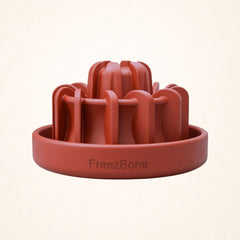
FreezLava
Introducing the FreezLava - a versatile chew toy with a unique lava-inspired design that...
$41.00
Shop FreezLava Heavy-Duty Enrichment Chew -
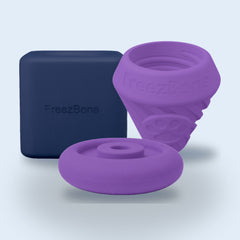
Tough Chewer Bundle
FreezBox, FreezCone and FreezDoughnut in extra-thick natural rubber: a $71 value for dogs who chew hard.
$103.00
Shop Tough Chewer Bundle - Extra-thick natural rubber for power chewers
Keep reading in Breed Guides

Shih Tzu Enrichment and Feeders: Keeping a Lap Dog's Brain Switched On
Calm, nose-led enrichment for a flat-faced lap dog: lick mats, snuffle mats, small feeders and frozen toys.

English Bulldog Enrichment and Feeders: Low Energy Does Not Mean Low Needs
Low-effort, brain-heavy enrichment for a flat-faced breed: slower meals, calmer afternoons, healthier weight.

Chihuahua Enrichment and Feeders: Big Brain, Small Dog, Real Boredom
Small-breed feeders, lick mats and scent games that give a Chihuahua's sharp brain a calm, focused job.