


Dog Dental Chews vs Toys: Which Is Better for Oral Health?
What dental chews and chew toys each do for teeth, what research shows, and how to combine them safely.

Your dog chews for fun, but their teeth and gums are getting something out of it too, or missing out. Dental chews and chew toys can both help keep plaque down, and pet parents often wonder which one actually does the job.
The truth is that each has real strengths and real limits. Here is what each one does, what the research shows, and where a Freezbone fits into your dog's dental routine.
Dental chews with the right texture or active ingredients, given daily, usually do more for plaque and tartar than chew toys. Chew toys are reusable and keep dogs chewing and engaged, but most do little for plaque on their own. Neither replaces brushing and vet dental checks, and most dogs do best with both.
What is the difference between dental chews and chew toys?
Dental chews
- Edible or semi-edible treats
- Built with ridges, textures or abrasive surfaces
- Some include enzymes or antibacterial compounds
- Made to reduce plaque, tartar and bacteria
- Used up, so you replace them
Chew toys
- Non-edible: rubber, natural rubber blends, nylon
- Some have textured surfaces
- Made to give your dog something to bite on
- Fight boredom and encourage healthy chewing
- Reusable for months with care
What does the research say about dental chews?
A few findings from research and vet-led studies are worth knowing:
- Chewing toughness matters. In a study by Bjone and colleagues, two dental hygiene chews of different toughness both significantly reduced plaque and calculus compared with a regular diet. The harder chew took more bites and more time, and cleaned better.
- Daily use is what counts. A 2020 study of novel dental chews (Carroll and colleagues) found that owners rate dental chews as very important, and that many chews reduce plaque and tartar when used every day.
- Brushing is the hard part. In dental home-care research, owners said natural chews matter for dental health, while tooth brushing had much lower compliance.
The more work a chew takes, the more cleaning it tends to do, as long as it is not harder than your dog's teeth.
Which is better for oral health: chews, toys or both?
Both have a role. Here is how they compare in practice.
| Aspect | Dental chews | Chew toys |
|---|---|---|
| Plaque and tartar | Chews with abrasive surfaces or active agents often reduce plaque and calculus more effectively. Brush-like features help. | Ridged or textured toys help mechanically, but many do not reach the gum line or between teeth. Less effective alone. |
| Bacteria | Some chews lower oral bacteria significantly. | Most toys are designed for durability and chewing satisfaction rather than antibacterial benefit. |
| Safety | Chews that are too hard or the wrong size can be a choking or fragment risk. Raw bones and very hard chews can crack teeth. | Toys that are too hard or rigid can wear or fracture teeth. Plush and rope toys can harbor bacteria or shed fibers. |
| Longevity | Used up, so you keep buying them. Daily chews keep hygiene consistent. | A good, durable toy lasts for months, is reusable and keeps your dog chewing. |
| Cost | Ongoing, but good value if the chew is effective. | Higher up front, better long-term value if it keeps your dog chewing. |
Where does a Freezbone fit into dental care?
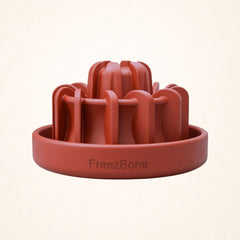
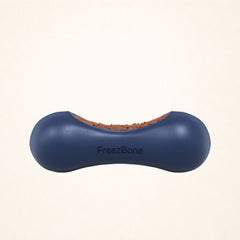
Freezbone toys sit between the two: a durable natural rubber chew toy that you fill with food and freeze. That combination changes how a dog chews.
Resistance that rewards chewing. The rubber has enough give and resistance to keep a dog chewing, and that chewing helps clean the surfaces of the teeth mechanically.
Slower, more deliberate chewing. A frozen, dog-safe fill makes your dog work steadily instead of gulping. That adds time on the teeth, and time is where chewing does its work.
A way in for picky chewers. Dogs who ignore dental chews or get bored with toys often stay with a frozen Freezbone, because it adds texture, licking and a food reward to the chewing.
A Freezbone is not a replacement for dental chews with active ingredients, or for brushing. What it adds is safe, engaging chewing your dog will happily do every day.
What are the risks with dental chews and chew toys?
Safer choices
- Chews with VOHC (Veterinary Oral Health Council) approval or peer-reviewed backing
- Hardness matched to your dog's breed, age and chewing force
- The right size, so nothing can be swallowed whole
- Durable toys you inspect regularly for wear
Watch out for
- Antlers and very hard nylon, especially for puppies and dogs with weaker teeth
- Raw bones and very hard chews that can crack teeth
- Edible chews that are too small or break into fragments
- Broken toy pieces and small parts
- Plush and rope toys that shed fibers
Wondering which toy materials are kindest to teeth? Our guide to chew toy materials compares rubber, TPR and nylon.
How often should a dog get dental chews or chew toys?
Daily or near-daily use of a good dental chew gives the best results in many studies. Durable chew toys can be rotated and used several times a day, as long as you check them for wear or damage.
A simple way to cover both is to tuck a natural chew into a frozen fill, so your dog gets the crunch and the long lick in one session:
“These freeze-dried chicken feet are a game changer! My Husky–German Shepherd lights up when he sees them, and I love adding one to his FreezeBone for an extra surprise.”
Karine B., verified buyer
How do I get the most out of chews and toys?
- Look for VOHC approval or peer-reviewed backing when you choose dental chews.
- Match hardness to your dog. Breed, age and chewing force all matter.
- Rotate chews and toys to keep interest high. Our weekly treat planner makes it easy.
- Keep up with vet dental checks, and brush at least a few times a week if you can.
- Fill and freeze a Freezbone to combine chewing, licking and reward.
For what frozen treats can and cannot do for teeth, see frozen treats and dental health: myths vs facts.
The short version
- Dental chews, used daily, usually do more for plaque and tartar than toys alone.
- Chew toys are reusable and keep dogs chewing and engaged.
- A frozen Freezbone slows chewing down and suits dogs who are bored of chews.
- Nothing replaces brushing and regular vet dental checks.
General information, not veterinary advice. Speak to your vet about your dog's dental care, especially if you notice bad breath, bleeding gums or a broken tooth.
Frequently asked questions
-
No. They help, but brushing remains the gold standard. Chews reduce plaque and tartar, but they do not clean below the gum line or between tightly spaced teeth well, so regular vet dental checks still matter.
-
Not entirely. Toys reduce boredom and encourage chewing, but unless a toy is textured or abrasive, its effect on plaque is small. Toys are most useful paired with chews or with a frozen fill that encourages licking and chewing.
-
Daily or near-daily use of a good dental chew gives the best results in many studies. Durable chew toys can be rotated and used several times a day, as long as you check them for wear.
-
Broken pieces, cracked teeth and choking hazards from small parts. Avoid overly hard items like antlers and very hard nylon for dogs with weaker teeth or young puppies, and always choose the right size.
-
A frozen fill makes dogs chew more slowly and deliberately, which adds time on the teeth. It is a useful extra, not a replacement for dental chews or brushing.
Shop this guide
Buy 2 save 15% · 3 save 20% · 4 save 25%
-
FreezLava
Introducing the FreezLava - a versatile chew toy with a unique lava-inspired design that...
$41.00
Shop FreezLava Heavy-Duty Enrichment Chew -
Freezstick
A fillable stick for tough chewers, with up to 45 minutes of licking and chewing per fill.
$35.00
Shop Freezstick - Indestructible Enrichment Chew
Keep reading in Chewing & Toys

Gifts for Dogs 2026: A Gift Guide for Every Kind of Dog
Dogs don't care what's in the box. They care about what they can do...

Is Bone Broth Safe for Dogs? Store-Bought vs Homemade, and How to Freeze It
Yes, bone broth is safe for most dogs, as long as it's plain: no...

Is Your “Indestructible” Chew Toy Toxic? The Truth About Rubber, TPR, and Natural Materials
How natural rubber, TPR, nylon, rope and antlers really compare for safety, and how to check any toy.